Ana Yaki Machava is a Mozambican artist whose work in painting and photography confronts the complex questions of labor and the often-invisible work performed by Black bodies in global societies. Her powerful paintings invite critical reflection on the position of Black labor in relation to other races and social structures worldwide.
While acknowledging the lens of Afro-pessimism that often influences such depictions, Machava actively counters it by channeling a spirit she refers to as Dicuemba. This spiritual process is central to her practice, serving as a powerful method to restore and assert the dignity of the Black body. The channeling is not merely a theme but an active, integral part of her creation.
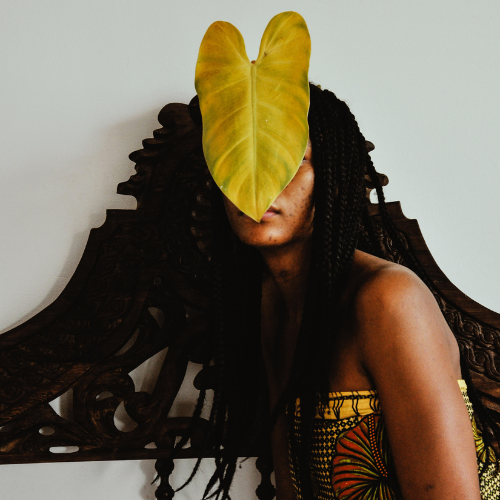
This spiritual engagement is most evident in her self-portraits and collage images, which are produced concurrently with her paintings. Machava clarifies that these pieces are not representations of the channeling process, but rather the tangible artifacts of the process itself—a direct communion with Dicuemba. Through this unique methodology, her work transcends simple critique, becoming a restorative and dignifying act.
×
Ana Yaki Machava is a Mozambican artist whose work in painting and photography confronts the complex questions of labor and the often-invisible work performed by Black bodies in global societies. Her powerful paintings invite critical reflection on the position of Black labor in relation to other races and social structures worldwide.
While acknowledging the lens of Afro-pessimism that often influences such depictions, Machava actively counters it by channeling a spirit she refers to as Dicuemba. This spiritual process is central to her practice, serving as a powerful method to restore and assert the dignity of the Black body. The channeling is not merely a theme but an active, integral part of her creation.
This spiritual engagement is most evident in her self-portraits and collage images, which are produced concurrently with her paintings. Machava clarifies that these pieces are not representations of the channeling process, but rather the tangible artifacts of the process itself—a direct communion with Dicuemba. Through this unique methodology, her work transcends simple critique, becoming a restorative and dignifying act.