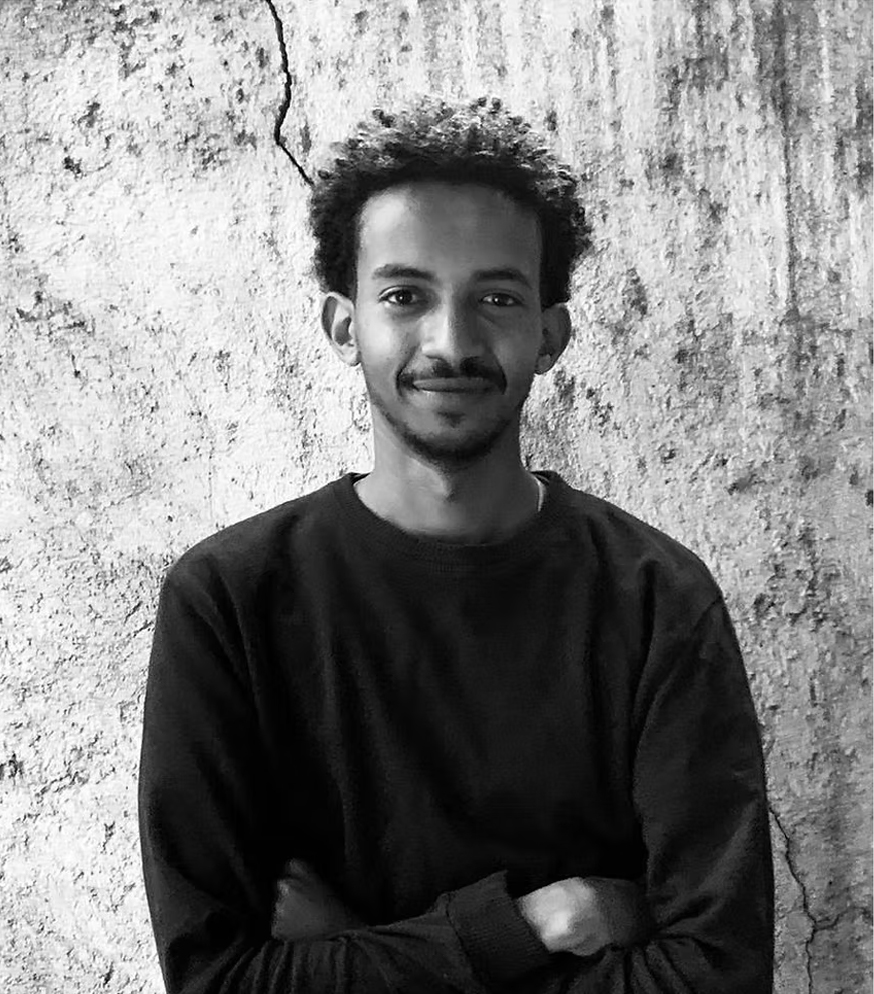
Tibeb Sirak (born 2001) is an Ethiopian artist whose practice explores his Somali heritage and the shared human experiences that connect us all. Rooted in the cultural traditions of Ethiopia and Somalia, his work reflects on the universal language of patterns—drawing inspiration from the rich visual traditions of textiles, jewelry, and traditional art forms that shaped his upbringing. Growing up in Somalia, he was immersed in the visual rhythms of East African heritage, noting that “the textiles, the jewelry making, and traditional art forms that surrounded me have informed my visual language.”
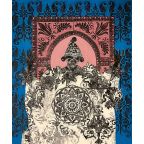
Working primarily in woodcut printmaking with acrylic highlights on canvas and paper, Sirak merges symbolism and expressionism to examine the interplay between culture, identity, and emotion. His use of vibrant color, texture, and natural materials evokes both harmony and tension between nature and human experience. In his ongoing series Patterns of Life, he reinterprets traditional motifs to spark dialogue on continuity, transformation, and the cyclical rhythms that shape existence.
×
Tibeb Sirak (born 2001) is an Ethiopian artist whose practice explores his Somali heritage and the shared human experiences that connect us all. Rooted in the cultural traditions of Ethiopia and Somalia, his work reflects on the universal language of patterns—drawing inspiration from the rich visual traditions of textiles, jewelry, and traditional art forms that shaped his upbringing. Growing up in Somalia, he was immersed in the visual rhythms of East African heritage, noting that “the textiles, the jewelry making, and traditional art forms that surrounded me have informed my visual language.”
Working primarily in woodcut printmaking with acrylic highlights on canvas and paper, Sirak merges symbolism and expressionism to examine the interplay between culture, identity, and emotion. His use of vibrant color, texture, and natural materials evokes both harmony and tension between nature and human experience. In his ongoing series Patterns of Life, he reinterprets traditional motifs to spark dialogue on continuity, transformation, and the cyclical rhythms that shape existence.