


Felix Shumba

Felix Shumba (b. 1989, Bulawayo) lives and works in Masvingo, Zimbabwe.
Recent exhibitions include: For want of a horse, a button was lost, Tiwani Contemporary, London, UK; Iwillmedievalfutureyou2, Lilith Performance studio, Malmö, Sweden (both 2025); a following year, Galleria Fonti, Naples, Italy; I Dream I’m Crossing the River, Uitstalling gallery, Belgium; Felix Shumba and Martin Seeds: Nervous Lines, Koop Projects, Brighton, UK (both 2024); Felix Shumba and Kiluanji Kia Henda: Memories of a Poisoned River, Museum of Natural History and Jahmek Contemporary Art, Luanda, Angola; Sharjah Biennial 15: Thinking Historically In the Present, Sharjah Art Foundation (all 2023); A Prelude, Bkhz Gallery, Johannesburg (2022).
Felix has participated in residencies at International Studio & Curatorial Program (ISCP), New York, USA (2025); Kiluanji Kia Henda Studio / Jahmek Contemporary Art, Luanda, Angola; Edition Verso, Johannesburg, South Africa (both 2023); Sharjah Art Foundation, Sharjah, UAE; Kemang Wa Lehulere Studio: Guest Artist, Cape Town, South Africa (both 2022).
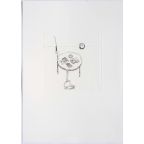
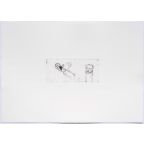
Shumba explores social trauma in an attempt to interrogate the ways in which history is constructed. During his residency at the edition ~ verso studio, Shumba made a series of line etchings titled, The Outsider. Each work, draws from his broader practice at deconstructing spaces (real or imagined)—which he describes as Fold Fields Space (FFS). These are sites generally characterized and haunted by death, trauma, tension, restraint, psychic terror, ecological damage and use of the military as an apparatus of control.
Shumba uses art as a mode of revealing the historical masks of violence and their bearing on material realities of blackness, central to Shumba’s work is constant search, probing and questioning of what is at stake, what is hidden, and what trumps the possibility of freedom. The series of etchings in The Outsider unravel a poetic narrative of representation, such as masking and concealment. Shumba engages the illusory, if performative, rituals of power that have sustained regimes of racial capitalist extraction. By deploying a dystopian imagery of the postcolony—culled from archival and media sources on settler-colonial Rhodesia—FFS brings the viewer closer to understanding contemporary predicaments in Zimbabwe.
Read More