As a sense organ, one of the functions of skin is to detect stimuli from the environment and transmit that information to the nervous system for processing. As a point of distinction from other sense organs, skin also happens to be the largest organ of the human body. Our skin is therefore constantly channeling great amounts of information in simultaneously processing external stimuli and communicating internal well-being, or lack thereof.
Amy Watson writes that “[skin] serves as the symbolic interface between self and world” (2010: 7). The artists of Skin mirror the complex organ in their constant responsiveness to the internal/external dichotomy. Their practices, although as varied in texture and tone as skin itself, are united in exploring identity as being the product of both the internal and external worlds one occupies. Skin contemplates exteriority and interiority certainly within but also beyond physical space, considering the perceived body as an external world, and our memories and psyche as the building blocks of an internal world. Skin, as led by its artists, thinks of the thin membrane that separates our perpetual dual state of subjecthood and objecthood.
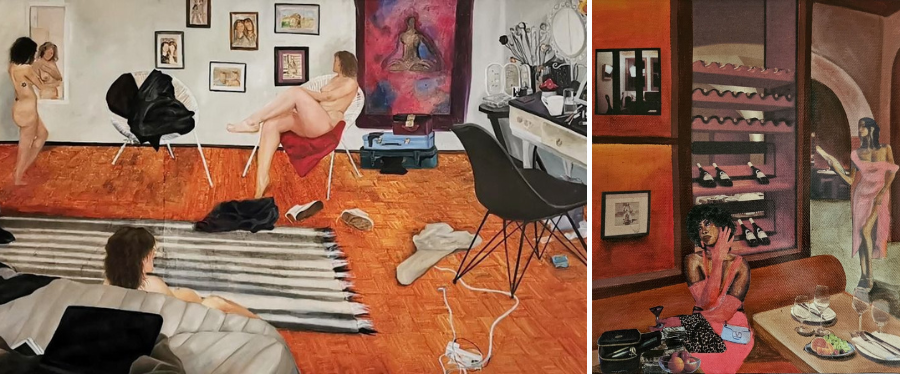
Latitudes Centre for the Arts third annual women's month exhibition brings together these women artists who offer tender, powerful, and sometimes playful reflections on what it means to be - and become - a woman in a world that is always watching and always shaping. Their work insists on the value of interiority, the importance of rest as a radical act of reclamation, the act of remembering, and the freedom found in making space for one's own story.
As a sense organ, one of the functions of skin is to detect stimuli from the environment and transmit that information to the nervous system for processing. As a point of distinction from other sense organs, skin also happens to be the largest organ of the human body. Our skin is therefore constantly channeling great amounts of information in simultaneously processing external stimuli and communicating internal well-being, or lack thereof.
Amy Watson writes that “[skin] serves as the symbolic interface between self and world” (2010: 7). The artists of Skin mirror the complex organ in their constant responsiveness to the internal/external dichotomy. Their practices, although as varied in texture and tone as skin itself, are united in exploring identity as being the product of both the internal and external worlds one occupies. Skin contemplates exteriority and interiority certainly within but also beyond physical space, considering the perceived body as an external world, and our memories and psyche as the building blocks of an internal world. Skin, as led by its artists, thinks of the thin membrane that separates our perpetual dual state of subjecthood and objecthood.
Latitudes Centre for the Arts third annual women's month exhibition brings together these women artists who offer tender, powerful, and sometimes playful reflections on what it means to be - and become - a woman in a world that is always watching and always shaping. Their work insists on the value of interiority, the importance of rest as a radical act of reclamation, the act of remembering, and the freedom found in making space for one's own story.